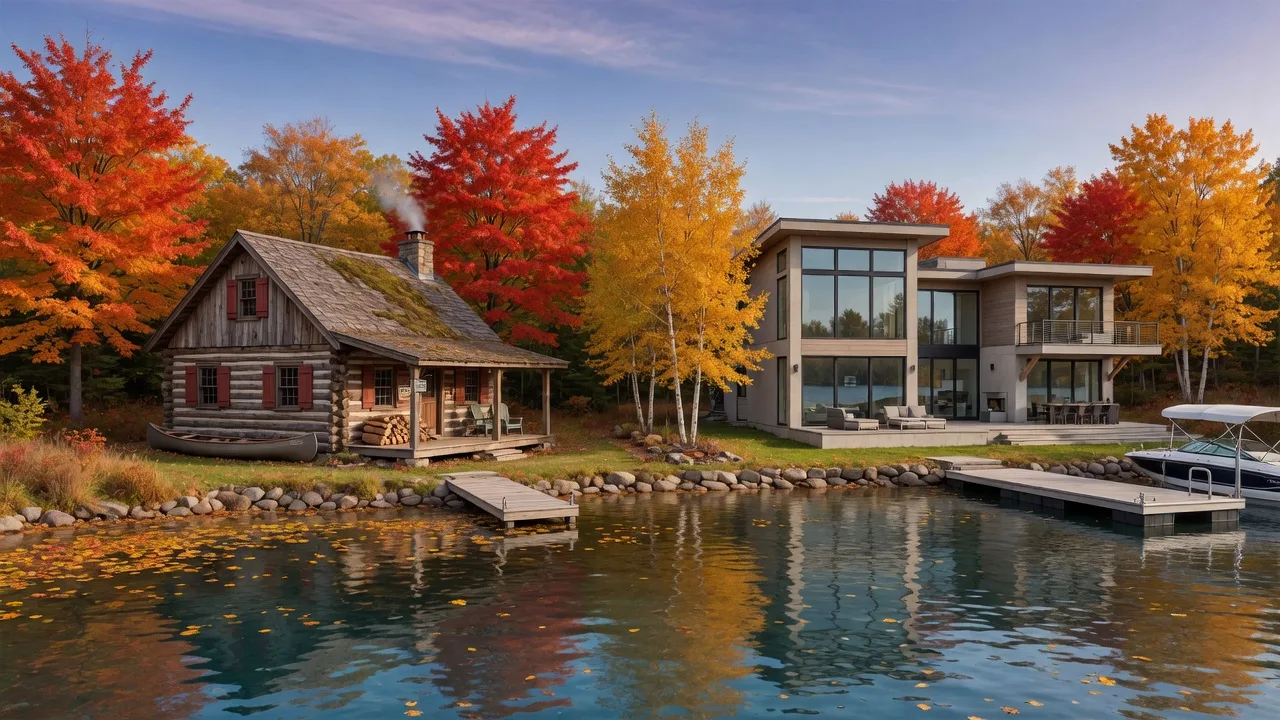
This is one of the most practical decisions you will make, and there is no universally right answer. The right choice depends on how you plan to use the property, your budget, and your tolerance for maintenance. Here is the honest trade-off.
The Case for a Seasonal Cabin
Seasonal cabins are typically less expensive. You are buying a property that does not have the full infrastructure needed for winter living: insulation, heating, plumbing winterization, and access on plowed roads. That lower price point opens up lake living to more buyers, and the rustic feel is part of the appeal for many families.
Seasonal cabins often come with lower property taxes and lower insurance costs. They also demand less year-round attention because you are not maintaining a full-time residence. If you plan to use the property mostly from May through September and do not want the overhead of a year-round home, a seasonal cabin can be an excellent choice.
The downside is limited use. You will need to winterize the plumbing, store furniture, and either board up or maintain the property through several months of cold. If the winter is mild, you might wish you could get up there. If it is harsh, the property sits empty. Seasonal cabins also tend to have a smaller buyer pool when it comes time to sell, which can affect pricing and days on market.
The Case for a Year-Round Home
A year-round lake home gives you full access to the property in every season. Winter on a Minnesota lake is beautiful, and having a properly insulated, heated home allows you to enjoy ice fishing, snowmobiling, cross-country skiing, and the quiet beauty of a frozen lake. Many of my clients who started with seasonal cabins eventually upgraded to year-round homes because they wanted more time on the water, not less.
Year-round homes also have a stronger resale market. The buyer pool is larger because the property works for both seasonal and permanent use. Financing is typically easier, and insurance is more straightforward. Year-round homes also tend to appreciate more consistently because they appeal to a broader range of buyers.
The trade-off is cost. Higher purchase price, higher taxes, higher insurance, higher utility bills, and more maintenance throughout the year. A year-round lake home is a serious commitment, both financially and in terms of time.
The Middle Ground
There is a middle option that more buyers should consider: a seasonal cabin with good bones on a lot where year-round conversion is possible. Some properties have the space and structure to support full winterization down the road. If you buy with that potential in mind, you can start with a seasonal cabin and convert it when your budget and lifestyle allow.
The key is to check before you buy. Can the well and septic handle year-round use? Is the road maintained in winter? Is the structure suitable for insulation and heating upgrades? A property that looks like a seasonal bargain may not be convertible without significant expense.
My Advice
Be honest about how much time you will actually spend at the property. If you realistically see yourself using it 10 to 12 weekends a year between Memorial Day and Labor Day, a seasonal cabin makes sense. If you dream of spending every weekend, working from the lake, retiring there, or hosting family through the holidays, invest in a year-round home.
The wrong choice here is not the difference between seasonal and year-round. It is buying a property that does not match how you actually live.

Noah Goedker
Realtor · Elevate Group · eXp Realty
Third-generation Brainerd Lakes Area real estate agent. I help buyers match property type to lifestyle, not the other way around.